There are few things more satisfying than a properly grilled churrasco: char on the outside, a rosy blush within, and a spoonful of bright green chimichurri melting over the top. This is Argentine grilling at its most honest.
What churrasco actually is
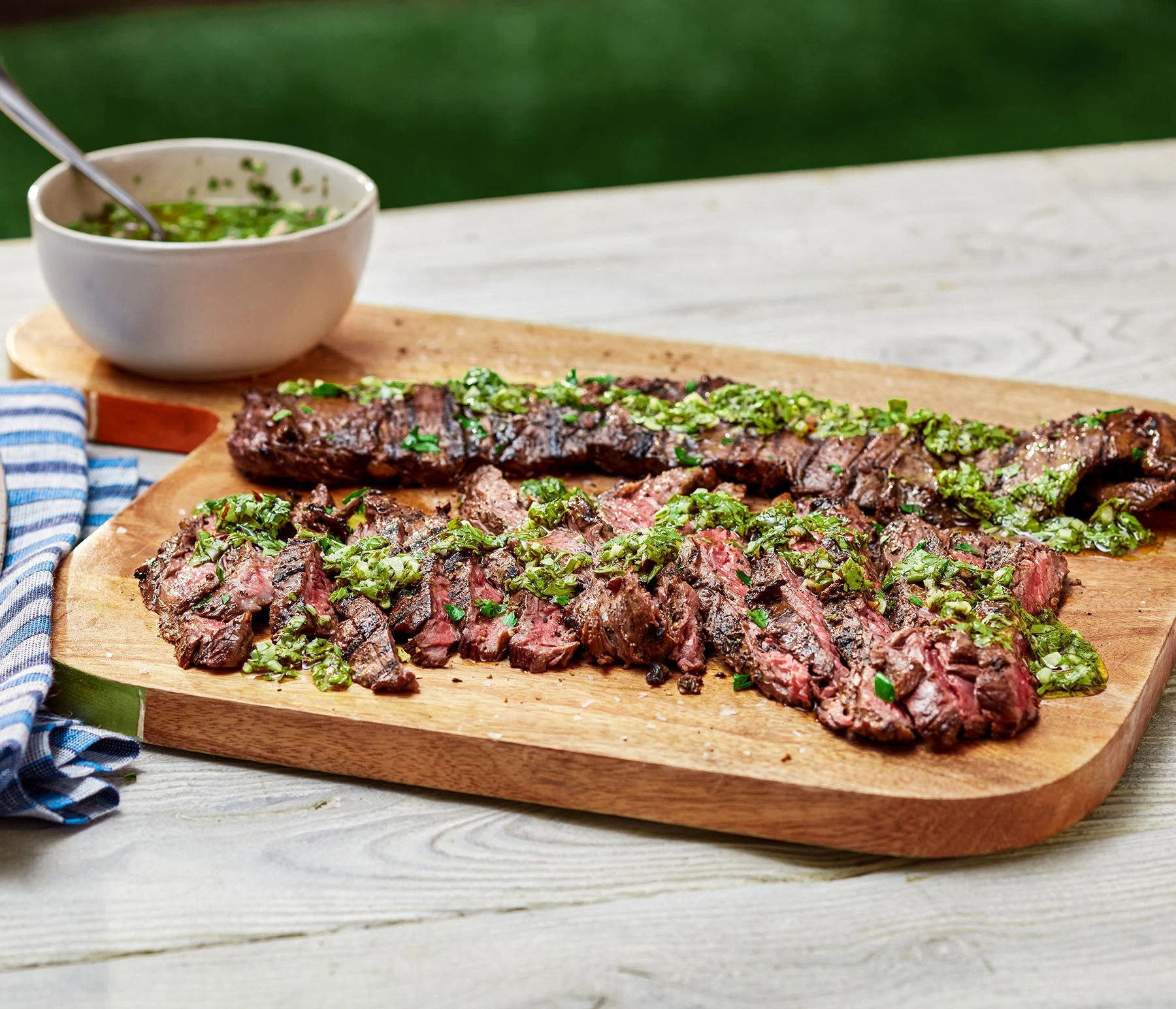
In much of South America, churrasco refers to grilled beef, and the cut we love for it is the skirt steak — a long, flat cut with loose, open grain and a deep, beefy flavor. It’s not the most tender cut on the animal, and that’s the point: skirt steak rewards high heat, a quick cook, and a sharp knife slicing against the grain at the end. Do those three things and it’s astonishingly good.
The magic of the grill
Argentina takes grilling — the asado — seriously, treating it as a craft and a social ritual. The key ideas are simple and worth stealing:
- High, dry heat to build a real crust (the Maillard reaction, if you want the science).
- Don’t crowd or fuss — let the meat sit, flip once, and trust the fire.
- Rest before slicing so the juices redistribute instead of running onto the board.
Chimichurri: the only sauce it needs
If churrasco is the melody, chimichurri is the harmony. It’s a raw, uncooked sauce of finely chopped parsley, garlic, oregano, red wine vinegar and olive oil, sometimes with a whisper of chili. The acid cuts the richness of the beef; the herbs lift it; the garlic makes it unforgettable.
Chimichurri should be chopped by hand. Blend it and you get paste; chop it and you get texture, and texture is the whole idea.
We make ours the slow way for exactly that reason. It’s also wildly versatile — try it on shrimp, on grilled vegetables, or (don’t tell anyone) on french fries.
How to eat it here
The flagship is the Churrasco Argentino — grilled skirt steak with sautéed onions and chimichurri, served with white rice, beans and warm tortillas. Want to go bigger? La Hermandad, the Brotherhood Platter, adds grilled shrimp, avocado and a red-onion salad to the churrasco for a proper feast.
Bring this straight to the table.