The empanada is proof that the best ideas are portable. A pocket of dough folded around something savory, sealed at the edge, and baked or fried — it’s so simple and so good that half the world independently agreed it was a keeper.
From Galicia, with love
The word empanada comes from the Spanish empanar, “to wrap in bread.” The dish’s European roots trace to Galicia in northwestern Spain, where large stuffed pastries were made to feed working people who needed a hot, sturdy meal they could carry. Sound familiar? The pattern repeats across cultures — the Cornish pasty, the Italian calzone, the samosa. Humans love a filling with a handle.
How it conquered a continent
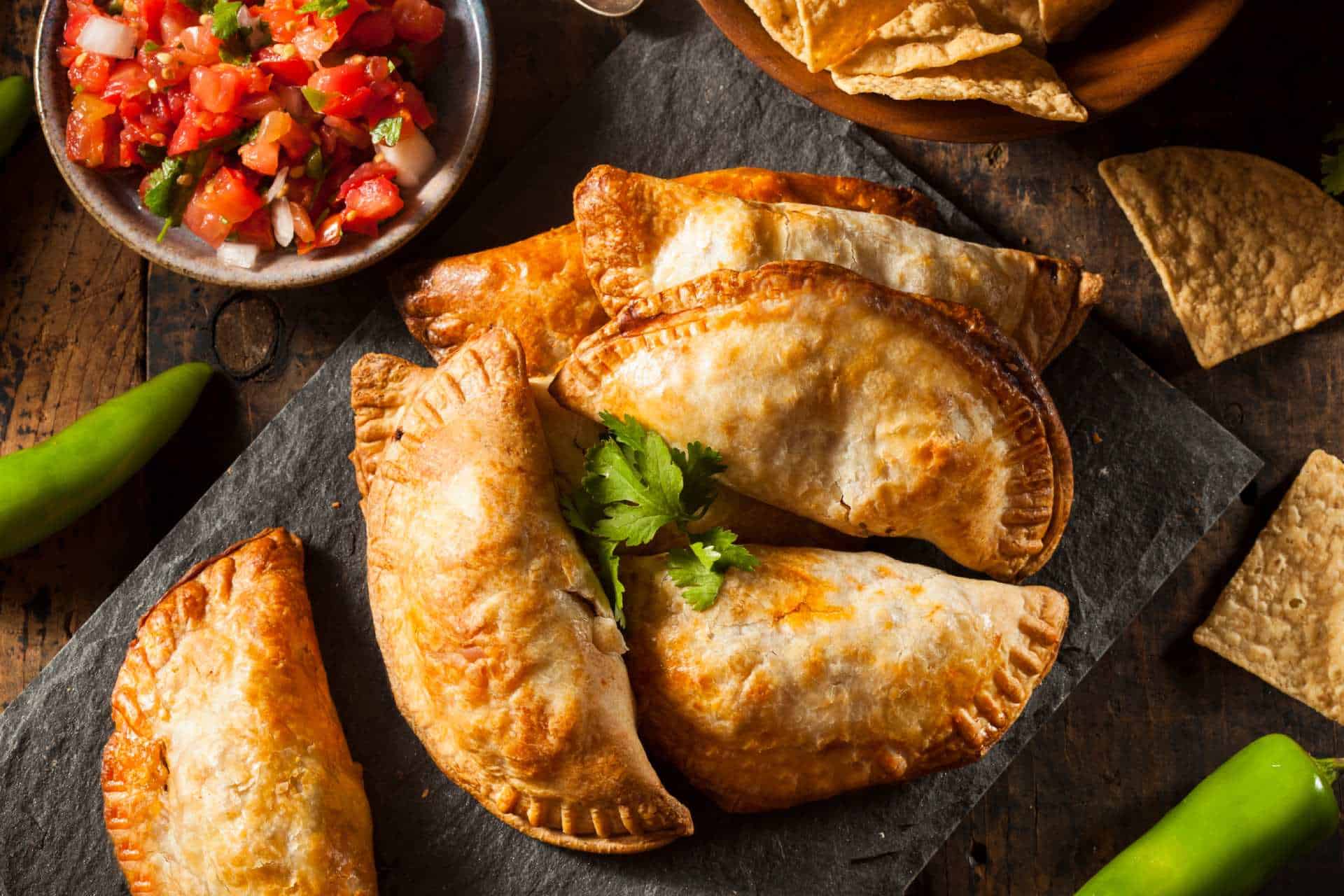
When the empanada crossed the Atlantic, it didn’t just survive — it multiplied. Nearly every Latin American country adopted it and made it their own:
- Argentina bakes them and prizes the repulgue, a decorative crimp that traditionally signals the filling inside.
- Colombia and Venezuela often use a corn-based dough and fry them to a shattering crisp.
- Chile is famous for the pino — beef, onion, egg and olive.
Same idea, a hundred dialects. That adaptability is exactly why we love serving them.
An empanada tells you where it’s from before you taste it — by its dough, its fold, and whether it was baked or fried.
Our four to know
We keep a tight, well-loved lineup, each with a filling that earns its place:
- Carne & Sofrito — shredded beef and that aromatic base, the crowd favorite.
- Pollo & Sofrito — shredded chicken, savory and comforting.
- Pernil — slow-roasted pork shoulder, rich and a little decadent.
- Vegetarian — seasonal vegetables and cheese for the meat-free crowd.
Why they’re the perfect food
An empanada asks nothing of you — no fork, no plate, no fuss. It’s breakfast, snack, appetizer or a full meal three at a time. It travels beautifully, which makes it ideal for delivery. And it carries centuries of “feed people well, and let them take it with them” baked right into the crust.
Bring this straight to the table.